


Resin Bound vs Resin Bonded: What's the Difference?

Updated: 3 days ago
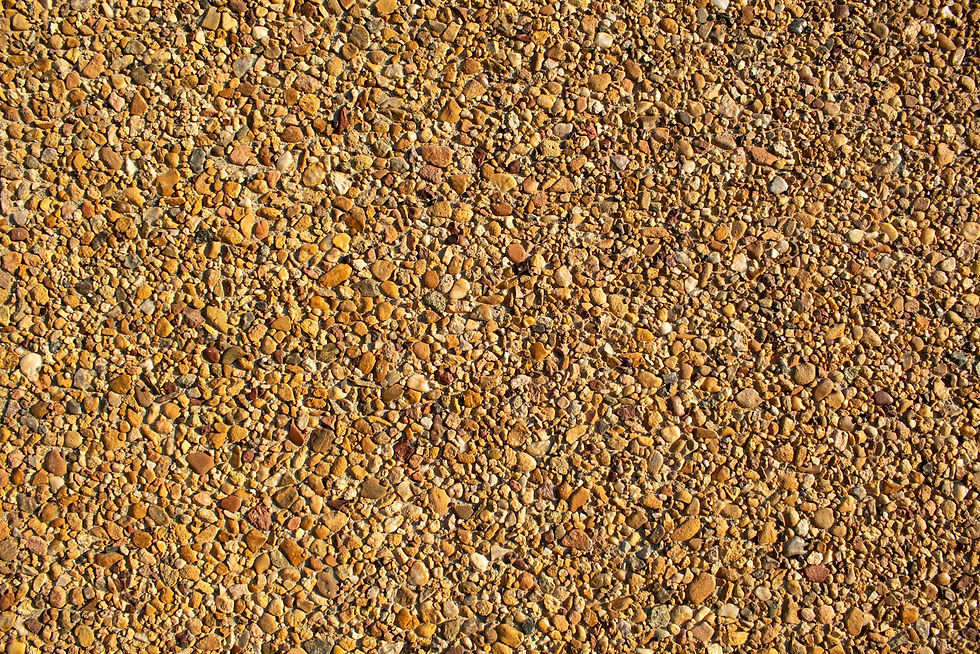
Resin bound stone is mixed with resin before it is laid, then trowelled smooth; resin bonded stone is scattered onto a coat of resin that has already been spread on the ground. That one difference decides almost everything else. Bound is smooth, thick and permeable, with every stone held. Bonded is thin, rough, usually not permeable, and the stones that do not stick come loose.
How each one is laid
Resin bound. This is the system used on our resin bound driveways. Dried aggregate and a two-part resin go into a forced action mixer until every stone is coated. The mix is barrowed out, spread and hand-trowelled to an even depth over a prepared base. Pavingexpert describes it as a single layer usually 15mm to 40mm deep, using aggregate from about 3mm up to around 20mm, and the finished surface has small open voids between the stones that water can pass through.

Resin bonded. A layer of resin is spread over a solid base (concrete or tarmac), then dry stone is broadcast onto it while it is tacky, an approach often called a scatter coat. Once the resin cures, the excess stone is swept off. Pavingexpert puts the finished layer at as little as 4-6mm thick, with most aggregates for this work around 6mm or less, because each stone is held only where it sits in the resin coat.
Resin bound vs resin bonded, point by point
Look and feel. Bound gives a smooth, flat, slightly glossy finish where you see the full face of each stone. Bonded looks more like a gravel path: textured and loose-looking, because the top of each stone is uncoated.
Drainage. This is the big one. Bound, laid on a permeable base, lets rain drain straight through. Bonded uses an unbroken layer of resin under the stone, so water cannot get through it; Pavingexpert describes scatter coat systems as usually impermeable. Water has to run off the surface to a drain or border.
Loose stones. On a bound surface every stone is coated and held through the full depth, so it does not shed. On a bonded surface, stones that did not bed into the resin come loose; where excess stone is not cleared it migrates across the surface, and thinly covered areas are left bald.
Grip. Bonded is very grippy because of its rough texture, which is why it is widely used on ramps, steps and footbridges. Bound has a textured stone surface and is generally not slippery underfoot.
Thickness and strength. Bound is laid around 18mm on a driveway and about 15mm on a path, and it carries the load across its full depth. Bonded is a thin dressing that relies entirely on the base below.
Lifespan. A resin bound drive laid well on a proper base can last up to 25 years. A bonded surface wears as stone is lost, so its appearance changes sooner.
Repairs. Bound can be cut out and patched, though colour-matching an older surface is never perfect. Bonded can be patched with fresh resin and stone, but the patch tends to show.
Is a resin bonded driveway cheaper?
Usually, yes. Homebuilding & Renovating describes bonded as the cheaper of the two, and it uses less material with no mixing. In the same article (June 2025), the managing director of a resin aggregate manufacturer puts a resin bonded overlay at roughly £80 to £120 per m² excluding any base preparation, against commonly £180 to £250 per m² for resin bound including the base. Where an existing base is sound and needs little preparation, MyJobQuote (2026) puts resin bound lower, at about £60 to £95 per m². These are typical UK market figures, not our prices, and the two systems are not doing the same job, so the cheaper one is not always the better value. Our post on whether resin driveways are expensive covers how the rest of a resin quote is built up.
Planning permission: why the difference matters in a front garden
In England, the rules on front gardens say a new or replacement hard surface over 5 square metres needs planning permission unless it is permeable or the rainwater runs to a lawn or border to soak away (see the government's guidance on permeable surfacing of front gardens).
A resin bound driveway on a permeable base (open-graded stone and porous asphalt) is permeable, so it meets the rule on its own. A resin bonded driveway is not, so on a front garden over 5 square metres it needs the water directed onto a lawn or border, or planning permission. The same is true of resin bound laid over an old solid concrete or tarmac base: the resin may be porous, but the base is not, so the surface as a whole does not drain through.
Which one should you choose?
Choose resin bound if you want a smooth, low-maintenance driveway, path or patio that drains itself, holds all its stone and lasts. It is the right system for nearly every domestic driveway, and the only one we lay, with UV-stable resin so the colour does not yellow. If you are still deciding whether resin suits your drive at all, our guide to are resin driveways any good sets out the pros and the drawbacks.
Resin bonded makes sense for small, steep or high-grip areas such as ramps and some steps, on a solid base with falls to shed the water, or where a textured gravel look is wanted without loose gravel. It is not a cheap version of resin bound; it is a different product.
How to tell which one you are being quoted for
Ask three questions: is the stone mixed with the resin before laying, how thick will it be, and is it permeable? A resin bound quote will say mixed, around 18mm on a driveway (about 15mm on a path), and permeable on a permeable base. A bonded quote will say scattered or broadcast, a few millimetres, and draining across the surface. If a quote says "resin driveway" and nothing else, ask before you sign.
Resin bound and bonded questions, answered
What is resin bonded gravel?
It is the scatter-coat system: fine gravel broadcast onto a resin layer on a solid base. It is sometimes sold as a "gravel effect" surface because it looks like gravel but does not move about underfoot like loose gravel, although some stones do come loose over time.
Can you lay resin bound over resin bonded?
Only if the bonded surface and its base are sound and well stuck down. Loose stone and weak areas must be removed first, and the result will not drain through, because the old resin layer is solid.
Is resin bound better than block paving?
They solve different problems. The side-by-side of resin driveways vs block paving goes through drainage, weeds, sinking and cost side by side.
We lay resin bound only, from our base in Tettenhall, with a 10-year guarantee on materials, workmanship and structure. If you would like a stone finish set in concrete instead, our exposed aggregate driveways are the alternative to compare at a free site visit.


Comments