


Driveway Ideas: 14 Designs for UK Homes

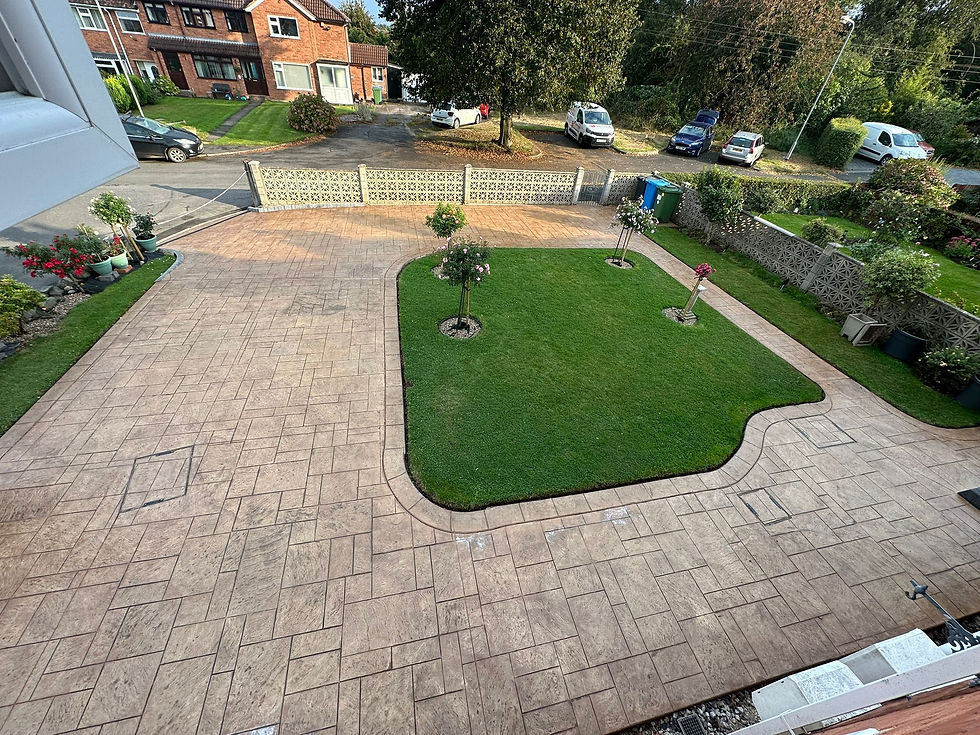
A good driveway design comes down to three choices: the surface, the edge, and what happens to the rain. Get those right and the extras (planting, lighting, a wall or a gate) are easy to add. Below are 14 ideas we see work on real homes, grouped by the decision they belong to, with the rules that apply in England. They are the same choices we talk through on every site visit for driveways in Wolverhampton and the Black Country.
Surface ideas: pick the finish first
The surface sets the look and the budget, so decide on it before anything else.
1. Smooth resin bound in a natural stone colour
Resin bound is natural aggregate mixed with clear resin and trowelled flat. It gives a smooth, jointless finish with no loose stones, and it lets water drain through when it is laid on a permeable base. Stone blends range from pale silver and white flint to warm golds and browns, and UV-stable resin stops the colour going amber. It suits period houses and new builds alike. Our resin bound driveways page shows the colours we lay.
Do not confuse it with resin bonded, where loose stone is scattered over a resin coat. That is a different, non-permeable system that sheds stone over time.
2. Pattern imprinted concrete for a stone or brick look
Imprinted concrete is a single slab, stamped while wet and sealed. Popular patterns include ashlar slate, cobbles and setts, herringbone brick and natural stone effects, in colours from charcoal and slate grey to buff and terracotta. You get the look of stone with no joints for weeds to push through. For a driveway, the slab itself should be at least 100mm thick.
3. Tarmac for a large or sloping drive
Tarmac is the most cost-effective way to cover a big area, and it copes well with steep gradients. Black is the classic finish; red tarmac is a warmer alternative. On its own it can look plain, which is why the edge detail (below) matters more on tarmac than on any other surface.
4. Exposed aggregate for texture and grip
Exposed aggregate is concrete with the surface washed back to show the stones in it. It has a natural, textured finish, and it works well on paths and patios that run on from the drive.
Border and edging ideas
The border frames the drive and holds its edges in place.
5. A contrasting border around imprinted concrete
A border band in a different colour or pattern (for example, a charcoal brick border around a slate grey ashlar centre) tidies up the edges and makes a large slab look designed rather than poured.
6. Block or kerb edging on tarmac
A single or double row of block edging or a concrete kerb along the sides of a tarmac drive gives it a crisp line and stops the edges crumbling. It is the cheapest way to lift a black tarmac drive.
7. A steel or stone edge for resin
Resin bound is only around 18mm thick on a driveway, on top of its base, so it needs a firm edge restraint. A slim steel edge gives a modern, almost invisible line; a stone or concrete kerb gives a more traditional frame.
Mixed finishes and layouts
8. Two surfaces, one design
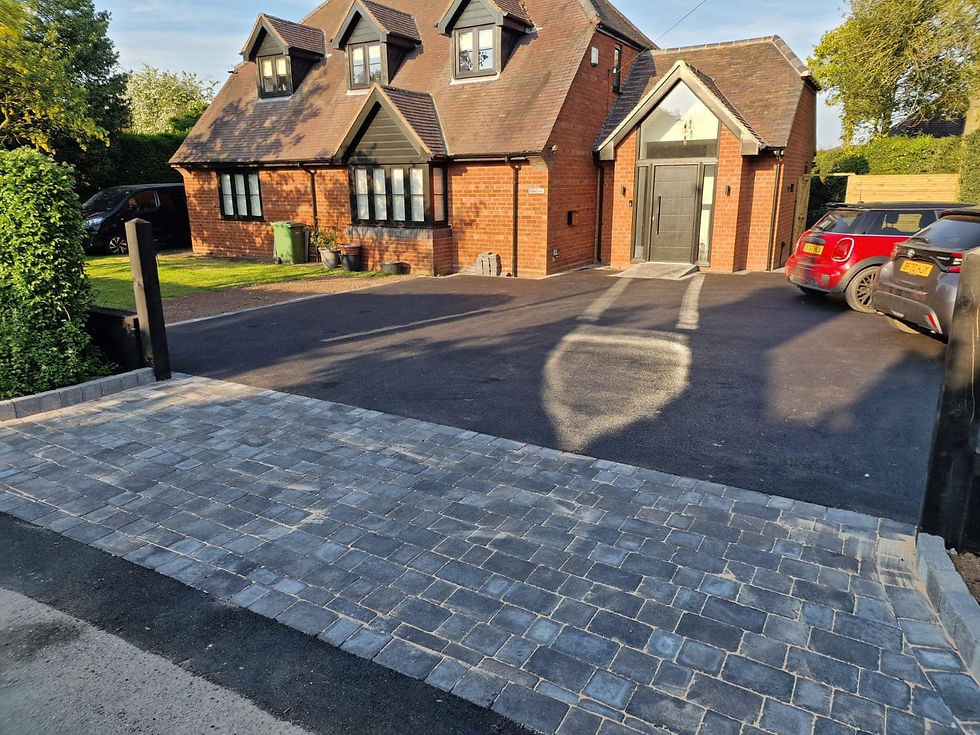
Mixing materials can break up a large frontage: a resin bound parking area with an imprinted concrete path to the door, or a tarmac drive with an exposed aggregate patio beside it. Keep the colours related so it reads as one scheme.
9. Wheel tracks with green between them
Two hard wheel tracks with planting or grass between them is a softer look for a narrow frontage that only parks one car, and it reduces the hard area that needs to drain.
10. A wider drive for two or three cars
If the front garden allows it, widening for an extra car is often the most useful upgrade. Remember that a wider opening onto the road may need the council to extend your dropped kerb, which has its own approval process. We cover that in our guide to getting a dropped kerb.
Planting and drainage ideas
11. Planted borders that soak up the rain
In England, a new or replacement hard surface over 5 square metres in a front garden needs planning permission unless it is permeable or the rain runs to a lawn or border on your property to soak away. A planted border or small rain garden at the low edge of the drive is both a design feature and a way of meeting that rule with a non-permeable surface. The government's guidance on paving front gardens shows several layouts. Its advice is to slope the drive away from the house and not to direct water into soakaways or rain gardens close to buildings.
12. A permeable surface instead of extra drains
If the whole frontage is going to be paved, a permeable surface such as resin bound on a permeable base handles the water itself, without a soakaway. Our post on driveway soakaway regulations explains the drainage options for non-permeable surfaces.
Finishing touches
13. Lighting along the edge
Low-level lights set into a border, or wall lights by the gate posts, make a drive safer at night and show off the finish. Plan the cable runs before the surface goes down, and have a qualified electrician do the electrical work. The same goes for an EV charger: running a duct under the drive before it is laid is far easier than cutting into a new surface later.
14. Walls, piers and gates
A low wall with piers frames a drive and gives a gate something to hang on. In England, gates, walls and fences next to a road used by vehicles can usually go up to 1 metre high without planning permission (2 metres elsewhere), but not on a listed building and its curtilage, and some areas have their own restrictions. If an existing garden wall looks tired, a decorative concrete coating such as Wallcrete can give it a stone or render effect without rebuilding it.
What sits under every good design
The finish is what people see, but the dig-out and sub-base decide how long it lasts. Every idea above needs a properly excavated and compacted base, falls that move water away from the house, and an edge that holds the surface in place. That groundwork is the part Pete and the team never cut, on any drive. If you are planning a new drive in Wolverhampton or nearby, we bring samples to the free site visit so you can see the colours and patterns against your own house.


Comments