


Resin Driveway Colours: Choosing the Right Blend

Updated: 3 days ago

The colour of a resin driveway comes from the stone, not from the resin. Resin bound uses a clear binder, so what you see is the natural aggregate (or a blend of several) that has been mixed into it. That is why the colour does not wash out, and why the two things that change it are the light it is seen in and, with cheap resin, the binder turning yellow.
Where resin driveway colour actually comes from
On the resin drives we lay, as on any resin bound surface, the blend is a recipe of dried stones, often several types in a mix of sizes. A grey blend might be mostly silver granite with a darker stone added for depth; a golden blend is typically built from buff and honey-coloured gravels; a black finish uses dark crushed stone. Tumbled coloured glass is also available for resin bound in brighter shades, though most driveways in the UK stay with natural stone.
Because every stone is coated in clear resin, the finish shows each piece individually. Up close you see speckles of different tones; from the road the eye blends them into one colour. That is worth remembering when you look at a small sample: a whole drive can read differently from a palm-sized tile, so see a larger area if you can.
Popular resin driveway colours in the UK
Grey and silver. The safe choice that sits well with grey roof tiles, render and modern doors. A grey resin driveway hides tyre marks and dust better than very light blends and does not show oil spots as starkly as pale stone.
Golden, buff and honey. Warm blends that suit red brick and soften a plain frontage. Our resin bound driveway and patio in Wombourne used a golden aggregate finish on both, tying the front and rear of the property together.
Sienna and bronze. Richer, browner tones that look good against both brick and pale render. The resin bound driveway in Pendeford is sienna-coloured, finished with tumbled block edging and a heather-toned border.
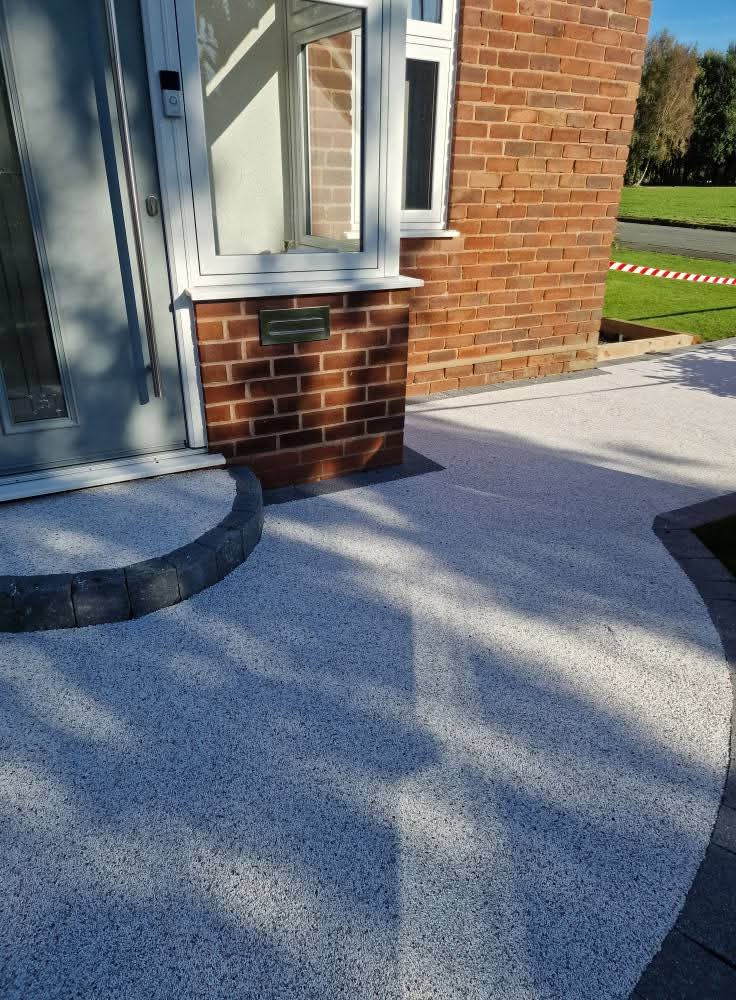
White and light flint. Bright and crisp, and they make a small frontage feel bigger. Light finishes show dirt sooner, so expect to wash them a little more often. The Warstones driveway and path was laid in Daltex White Flint with black granite block borders.
Black and charcoal. A black resin driveway looks sharp on contemporary houses and pairs well with anthracite windows. It shows dust, salt marks and leaves more than mid-tones, and dark stone gets warmer underfoot in direct sun.
Most homeowners pick from a range of standard blends. A good installer will show you real samples and, ideally, a finished drive in the same blend you can go and look at.
How resin colours look wet vs dry
Wet stone is darker and richer than dry stone. A golden blend goes almost amber in the rain; a grey goes towards charcoal. Because resin bound is permeable, it dries back faster than a sealed surface, but on a dull British day you will see the wet colour often. Look at your sample both ways before you decide. Pour a little water on it.
UV-stable resin: why some resin driveways turn yellow
This is the part of colour choice that most people never hear about until it goes wrong. There are two broad families of polyurethane resin used in resin bound surfacing:
Aliphatic (UV-stable): formulated not to discolour in sunlight. The colour you pick is the colour you keep.
Aromatic (non-UV): cheaper, and it yellows and darkens in sunlight. Manufacturer guidance describes non-UV resin surfaces turning a deep yellow-brown over a number of weeks.
The yellowing is often patchy. The same guidance notes patches where cars are parked or plant pots have stood, which leaves a ghost outline of whatever usually sits there. A quote that is noticeably cheaper than others for the same area is sometimes cheaper because of the binder, so ask in writing which resin is being used.
We use UV-stable resin on every resin bound driveway we lay, for exactly this reason. It costs more than non-UV resin, and it is the only way the colour holds; resin type is also one of the main points in our guide to are resin driveways any good.
Borders, bands and mixing colours
You are not limited to one blend. The most common combinations we see are:
A lighter field with a darker border. Charcoal or black block edging around a grey or golden resin centre frames the drive and hides wheel marks along the edges. Our Claregate driveway has a charcoal tumbled-block border.
Two resin blends side by side. A darker blend for a path or parking bay, split from the main drive with a thin metal strip.
Tone-on-tone. A border only a shade away from the main blend, for a subtle, high-end look.
Coloured resin and blends with more decorative stone usually cost a little more per square metre than a standard grey or buff mix, and complex patterns add labour. Our post on whether resin driveways are expensive explains how the rest of the price is built up.
Resin driveway colour questions, answered
Will a resin driveway fade?
Not if it is laid with UV-stable resin. The stone holds its natural colour and there is no dye to wash out. A surface that has changed colour has usually yellowed (non-UV resin) or picked up grime that a wash will lift.
What colour resin driveway hides dirt best?
Mid-tone blends, such as mixed greys and browns, hide dust, leaves and tyre marks better than very light or very dark finishes.
Can I choose a different colour for a patio or path?
Yes. Many people match them to the drive, but a contrast works too. If you are pricing a patio as well, our resin patio cost post covers how small areas are priced.
Ask to see physical samples at your free site visit in and around Wolverhampton, so you can judge the blends against your own brickwork in daylight. If you are also weighing up a concrete finish, exposed aggregate driveways give a different look, with the stone set into concrete.


Comments