


Coloured Tarmac: How Red and Buff Driveways Are Made and What They Cost

Updated: 3 days ago

Coloured tarmac is ordinary tarmac with the colour built into the surface course, most often red, with buff and other paler shades available from some plants. The colour comes from pigment in the binder, coloured stone in the mix, or coloured chippings rolled into the top. Which of those you get decides whether a red drive stays red or fades towards brown. Expect to pay more than for black: one UK cost guide puts the premium at around £10-£20 per m².
How is coloured tarmac made?
Standard tarmac driveways are black because bitumen is black. To get a colour, plants use one of three approaches:
Pigmented binder, normal stone. The binder is coloured but the aggregate is the same grey or dark stone used in a black mix. It is the cheaper route.
Pigmented binder with coloured stone. The binder is coloured and the aggregate is chosen to match, such as a red quartzite. This is the better option for a lasting colour.
Coloured chippings in a hot rolled asphalt surface. Pre-coated chippings, either naturally coloured stone or stone coated in a pigmented binder, are spread over a hot rolled asphalt layer and rolled in. This is more of a road and machine-laid finish than a driveway one.
Part of the extra cost is at the plant: Pavingexpert notes that plants often charge for cleaning the black material out before a coloured batch, cleaning the wagons, and cleaning again before switching back to black, especially for the paler colours.
Does red tarmac fade?
Some does, and it comes down to the stone. As a drive weathers, the binder on the surface wears off the tops of the stones. If the stone is ordinary grey aggregate, the surface drifts from red towards a dull grey-brown. Pavingexpert describes exactly this: coloured binder with ordinary aggregate may lose its colour as the aggregate becomes more exposed, whereas a good red surface uses red binder with red aggregate, so the colour holds as it wears.
That is the single most useful question to ask about a coloured tarmac quote: is the aggregate coloured as well, or only the binder? Expect the colour to change a little in the first months as the fresh binder film wears off the surface stones.
What colours does tarmac come in?
Red is by far the most common and the easiest to source for a domestic job. Paler colours such as buff exist, and other shades are used on cycle lanes and play areas, but they are specialist mixes that cost considerably more. For a domestic drive, supply is the practical limit: a colour the local plant does not run regularly can be hard to justify for a small area.
How much does coloured tarmac cost?
Typical UK figures:
Black tarmac drive: most quotes fall at £50-£90 per m² within a wider £45-£100 range (BestBuilders, MyJobQuote), broken down by size in our tarmac driveway cost guide; Checkatrade's average is around £90 per m² including labour.
Coloured premium: usually around £10-£20 per m² more than black (MyJobQuote).
Pavingexpert's rule of thumb: on a typical 60m² residential drive, red macadam can add around 30%, and some of the paler colours as much as 100%.
The premium is on the surface course only. The sub-base and binder course underneath are the same as for a black drive, because the colour has no structural job. Your real figure depends on size, colour and how much of the drive is coloured, and comes from a quote after a site visit.
Coloured tarmac borders, bands and features
Colour does not have to cover the whole drive. Common ways to use it:
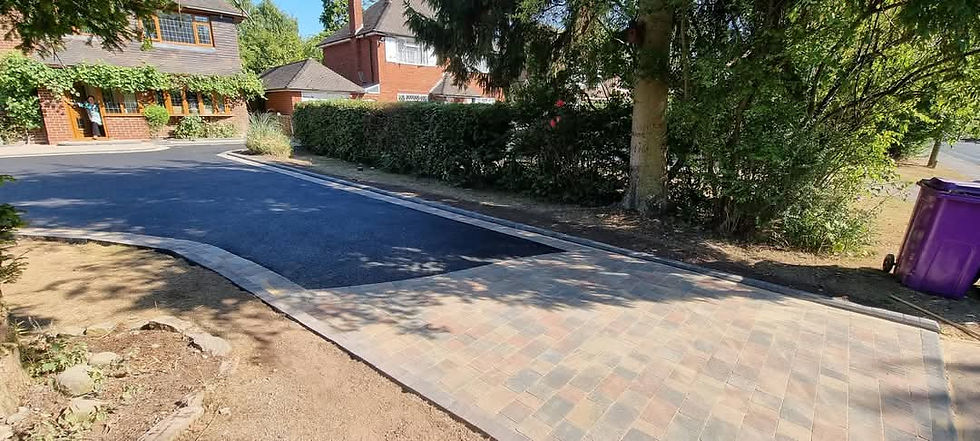
A red apron at the entrance, with black tarmac behind.
Bands or borders of coloured tarmac to mark a path or parking bay within a black drive.
A coloured footpath alongside a black drive, so the two read as separate spaces.
Kerb or block edging in a contrasting tone, which frames black tarmac without the cost of a coloured mix.
Coloured sections still need edge restraint and clean joints, and the join between colours is a cut line that needs sealing like any other joint.
Is coloured tarmac as strong as black?
Yes, if the build-up is the same. A coloured drive should still have a compacted crushed stone sub-base, a binder course of around 50mm and a coloured surface course on top, the same depths set out in how thick tarmac should be on a driveway.
What are the alternatives for a coloured drive?
If colour is the main reason you are looking, compare these too:
Pattern imprinted concrete. Colour is built into the concrete surface and protected by a sealer, with a wide range of patterns. Our pattern imprinted concrete driveways come in charcoal and slate greys through to buff and terracotta tones.
Resin bound. Natural stone colours in a smooth, permeable finish.
Tar and chip. A stone-coloured surface made by rolling chippings into a bitumen spray; see our explainer on tar and chip driveways.
Coloured tarmac questions, answered
Can you colour an existing black tarmac drive?
Not with tarmac itself. You can overlay a sound drive with a new coloured surface course, or use a coloured surface coating, but coatings wear in the wheel tracks and need reapplying.
Does red tarmac show oil stains more?
Dark oil marks show more against red or buff than against black, and fuel or solvent spills soften any bitumen-based surface. Clean spills quickly.
Is coloured tarmac permeable?
Not normally. Standard coloured tarmac is a dense, impermeable surface like black tarmac, so in England a front drive over 5m² still needs to drain onto your own land or have planning permission.
Thinking about a red drive?
We have been surfacing drives around Wolverhampton and south Staffordshire for over 25 years. We will show you what is available locally, what it costs against black, and whether a coloured band or border gets you the look for less. Ask us for a free quote.


Comments