


What's The Best Driveway Material For UK Homes? A Full Comparison

Updated: Jul 3
Picking the right driveway material is a big call. It's the first thing visitors see, it carries the weight of your car day in and day out, and it'll be on display for years. Get it wrong and you're redoing the job within a decade. In over 25 years of laying driveways across Wolverhampton and the West Midlands, we've worked with every material a UK homeowner is likely to consider. Here's an honest comparison of the four most popular options, with the pros, cons, and where each one makes sense.

What is the best driveway material?
The best driveway material depends on your budget, the look you want, and how much maintenance you're willing to do. For most UK homeowners, the four leading options are resin bound, pattern imprinted concrete, tarmac, and block paving. Each suits a different mix of price, kerb appeal, and longevity, and there's no single winner for every property.
How to choose the best driveway material for your home
Before getting quotes, it pays to think about what matters most to you. Here are the seven factors we walk every customer through:
Budget. Both upfront cost and the long-term cost of repairs or resealing.
Kerb appeal. Some materials suit period houses, others suit modern builds. Match the surface to the style of the property.
Maintenance. Some surfaces stay looking sharp with very little effort. Others need annual attention.
Drainage. Since 2008, most new driveways need to either drain water naturally or include drainage to handle runoff. We've covered the soakaway regulations for new driveways in a separate guide.
Durability. How much weight and traffic the surface needs to take, including multiple cars or any heavy vehicles.
Climate. West Midlands winters bring frost, rain and the odd freeze-thaw cycle. Some materials cope better than others.
How long you plan to stay. If you're selling in five years, you want a surface that holds its look without major upkeep.
If you skip this step, you'll end up comparing the wrong things. We've had customers come to us after spending a fortune on a surface that didn't suit their property or their lifestyle.

Resin bound driveways
Resin bound is a mix of natural aggregate and clear resin, trowelled out by hand and set to a smooth, permeable finish. It's grown in popularity over the last decade because it looks modern, drains naturally, and doesn't crack or sink like older surfaces.
Pros of resin bound
Modern look. Wide range of colours and stone types, all with a clean, contemporary finish.
Fully permeable. Water drains straight through, which means no separate drainage and full SUDS compliance.
Low maintenance. A jet wash once or twice a year is usually all it takes.
No weeds. Aggregate is bound, so nothing can push through.
Comfortable underfoot. Smoother than block paving, easier than gravel.
Cons of resin bound
Higher upfront cost. Generally one of the more expensive options.
Needs a solid base. Usually laid over existing tarmac or fresh concrete, which adds to the prep work.
UV can affect some resins over time. Modern UV-stable resin solves this, but it's worth checking with your installer.
Best for
Homeowners who want a smart, low-maintenance finish without separate drainage. Particularly well suited to modern or newly renovated homes.

Pattern imprinted concrete driveways
Pattern imprinted concrete (PIC) is poured concrete that's stamped with a textured pattern while wet, then sealed and coloured. It can be made to look like cobble, brick, slate, or natural stone, often at a fraction of the cost of the real thing.
For specific pricing, we've broken down concrete driveway cost in Wolverhampton in a separate guide.
Pros of pattern imprinted concrete
Hundreds of design options. Patterns and colours can be mixed to suit any property.
Highly durable. Concrete is one of the strongest driveway surfaces, easily handling multiple cars.
No weeds or moss. Sealed surface keeps everything off.
Long lifespan. Properly laid PIC can last 25 years or more.
Cons of pattern imprinted concrete
Needs resealing. Every 3 to 5 years to keep the colour vibrant and the surface protected.
Not permeable. Drainage needs to be designed in from the start.
Can crack if not laid properly. A poor base or skipped expansion joints will cause issues down the line.
Best for
Homeowners who want the look of natural stone or cobble without the cost. Works particularly well on larger driveways where pattern and colour can really stand out.
Tarmac driveways
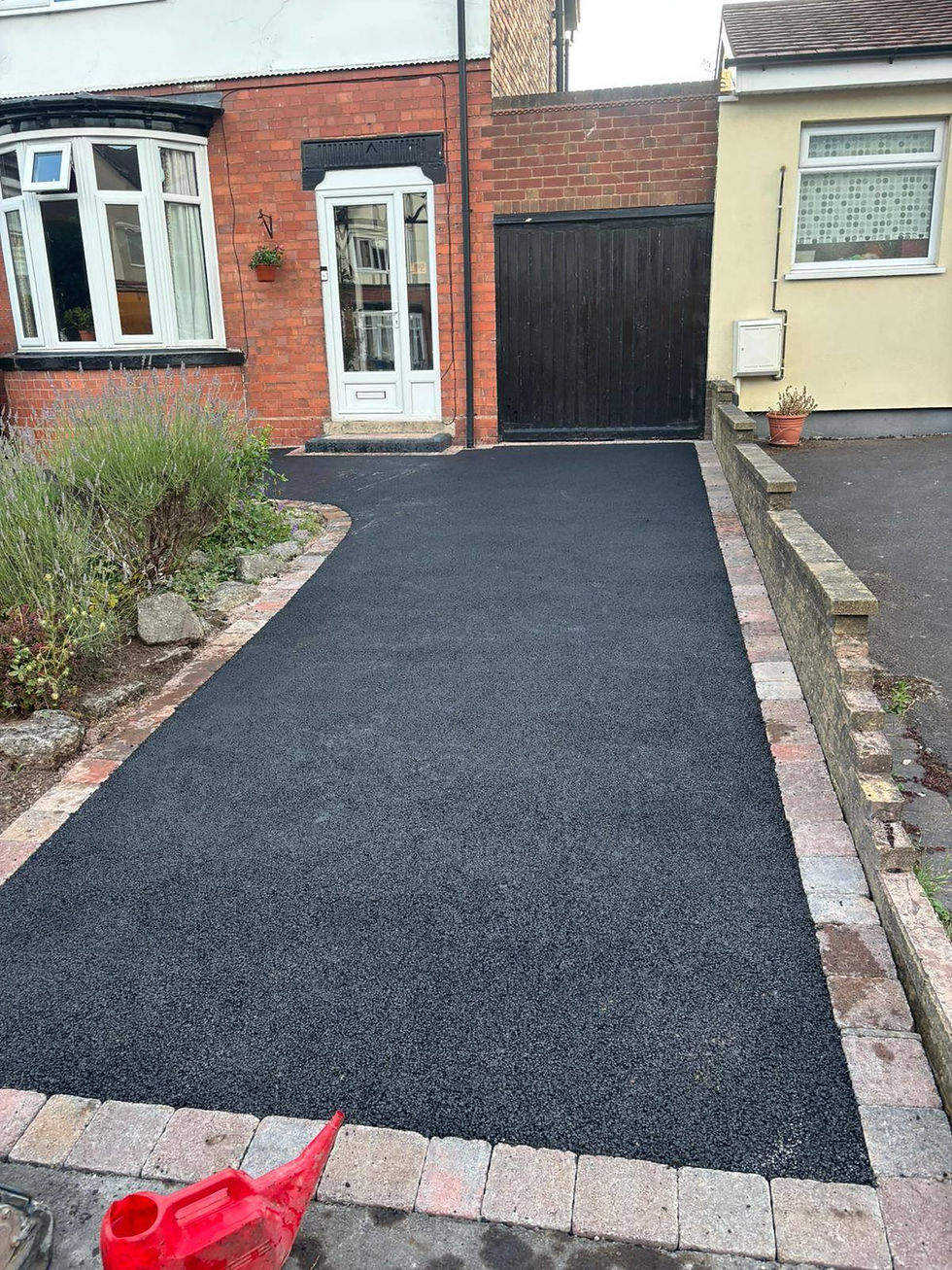
Tarmac (also called asphalt) is one of the most established driveway surfaces in the UK. It's a mix of bitumen and aggregate, rolled flat while hot. Simple, reliable, and quick to lay.
Pros of tarmac
Most affordable of the four main options, especially for larger areas.
Quick installation. A typical drive can be done in a day or two.
Smooth and quiet underfoot. Comfortable to walk or drive on.
Easy to repair. Damaged sections can be patched without redoing the whole drive.
Cons of tarmac
Plain look. Tarmac is functional rather than decorative, though block borders can dress it up.
Softens in extreme heat. Heavy stationary loads like skip wheels or car jacks can leave marks.
Fades over time. UV gradually lightens the surface from black to grey.
Needs occasional cleaning. We've covered how to clean a tarmac driveway without damaging the surface in a separate guide.
Best for
Long driveways, budget-conscious homeowners, and properties where function matters more than ornament. Often the go-to for rural or semi-rural homes.

Block paving driveways
Block paving uses individual blocks laid in a pattern over a sand and aggregate base. It's a classic British look that suits period properties especially well, and a wide range of block colours and patterns means you can match the style of your home.
We don't install block paving ourselves at Drive Tech UK. We focus on resin, concrete and tarmac because that's where we can deliver the best results. If you're leaning towards block, specialist driveway paving installers can talk you through the full range of block options.
Pros of block paving
Classic, traditional look. Suits older and period properties particularly well.
Individual blocks can be replaced. If one cracks or stains, you can swap it out rather than redo the lot.
Wide range of patterns and colours. From herringbone to basketweave, with brick or stone-effect blocks.
Permeable options available. Some block systems meet SUDS requirements.
Cons of block paving
Weeds and moss between joints. Probably the biggest gripe we hear from homeowners with older block paving.
Can sink or shift over time. Especially if the base wasn't prepared properly.
More maintenance. Resanding and resealing every few years to keep it looking sharp.
Higher cost than tarmac. Particularly for premium clay or concrete blocks.
Best for
Period properties, smaller driveways where the detail can be appreciated, and homeowners who don't mind a bit more upkeep in exchange for a traditional look.

A note on gravel driveways
Gravel is the cheap option, and for rural properties with long sweeping drives it works well. For most suburban homes in Wolverhampton, though, it brings more problems than it solves. Stones spread onto the road, weeds come through, and it's awkward with prams or wheelchairs. We'd usually steer customers away from gravel unless they have a very specific reason for wanting it.
Side-by-side comparison
To put the four main materials next to each other:
Resin bound: Best for modern look and permeability. Mid-to-high cost. Low maintenance.
Pattern imprinted concrete: Best for design variety and durability. Mid-to-high cost. Needs resealing every few years.
Tarmac: Best for value and large areas. Low-to-mid cost. Low maintenance.
Block paving: Best for period charm. Mid-to-high cost. Higher maintenance.
Which driveway material is best for you?
If you want the most modern look with the least upkeep, resin bound is hard to beat. If you want the widest design flexibility and you're happy to reseal every few years, pattern imprinted concrete gives you the broadest range of styles. If budget or scale is the main concern, tarmac is the most practical option, particularly for larger driveways. Block paving still earns its place for period properties and smaller, character-led drives.
The honest answer is that the best material depends on your home, your usage, and your budget. We'd rather talk you through it than push you towards one option that doesn't suit your situation.
Get a free quote for your new driveway in Wolverhampton
We install resin bound, pattern imprinted concrete and tarmac driveways across Wolverhampton and the wider West Midlands. For an honest opinion on what would suit your property, get in touch with our team. We'll come out, take a proper look, and talk through the options that work for your home and your budget.


Comments