


What Is Exposed Aggregate Concrete?


Picture a normal concrete slab with the top few millimetres of grey cement paste taken off, so the stones inside the mix show at the surface. That's exposed aggregate concrete. You get the strength of a concrete slab with the look and grip of natural stone, and because the stones are part of the slab rather than scattered on top, they don't kick loose like gravel.
How is exposed aggregate concrete made?
There are two basic methods, one of them with a variation, and the difference matters for how long the finish lasts.
Washed to expose, with a retarder. This is the method pavingexpert describes as preferred for heavier-duty use. The concrete is poured, levelled and finished, and once the bleed water has gone (typically 1 to 4 hours) a surface retarder is sprayed on, which stops the cement paste in the top 3-6mm from setting while the rest of the slab hardens normally. The slab is covered overnight, then 12 to 18 hours later the soft surface layer is washed off with a pressure washer (pavingexpert describes using one at around 100 bar) or a stiff brush and hose. The stones are left standing proud and locked into the slab.
Washed to expose, without a retarder. The surface is hosed and brushed from roughly an hour after placing, as it starts to stiffen. It works, but the timing is unforgiving, it takes considerably more skill, and an afternoon pour can run into the dark.
Surface dressed (seeded). Decorative stones are scattered over the fresh concrete and tamped in. It's the cheapest method and suits paths and patios, but trade guidance warns that stones only pressed into the surface can be flicked out by wear and traffic, showing plain concrete underneath.
For exposed aggregate driveways, the washed method with the decorative stone mixed right through the top of the slab is the one to ask for, because the stones are held in place rather than sitting on the surface.
What's under the surface?
The structure is the same as any concrete drive: a compacted crushed stone sub-base (100mm minimum for a light-duty drive in LABC Warranty guidance) and a slab at least 100mm thick for cars, 150mm on clay or poor ground. Pavingexpert notes a damp proof membrane is laid over the sub-base so the fresh mix doesn't lose its water into the stone.
Joints are cut like any concrete slab, and the finished surface is usually sealed once dry.
What stones can you have?
The stone choice is the whole look, so it's worth seeing samples.
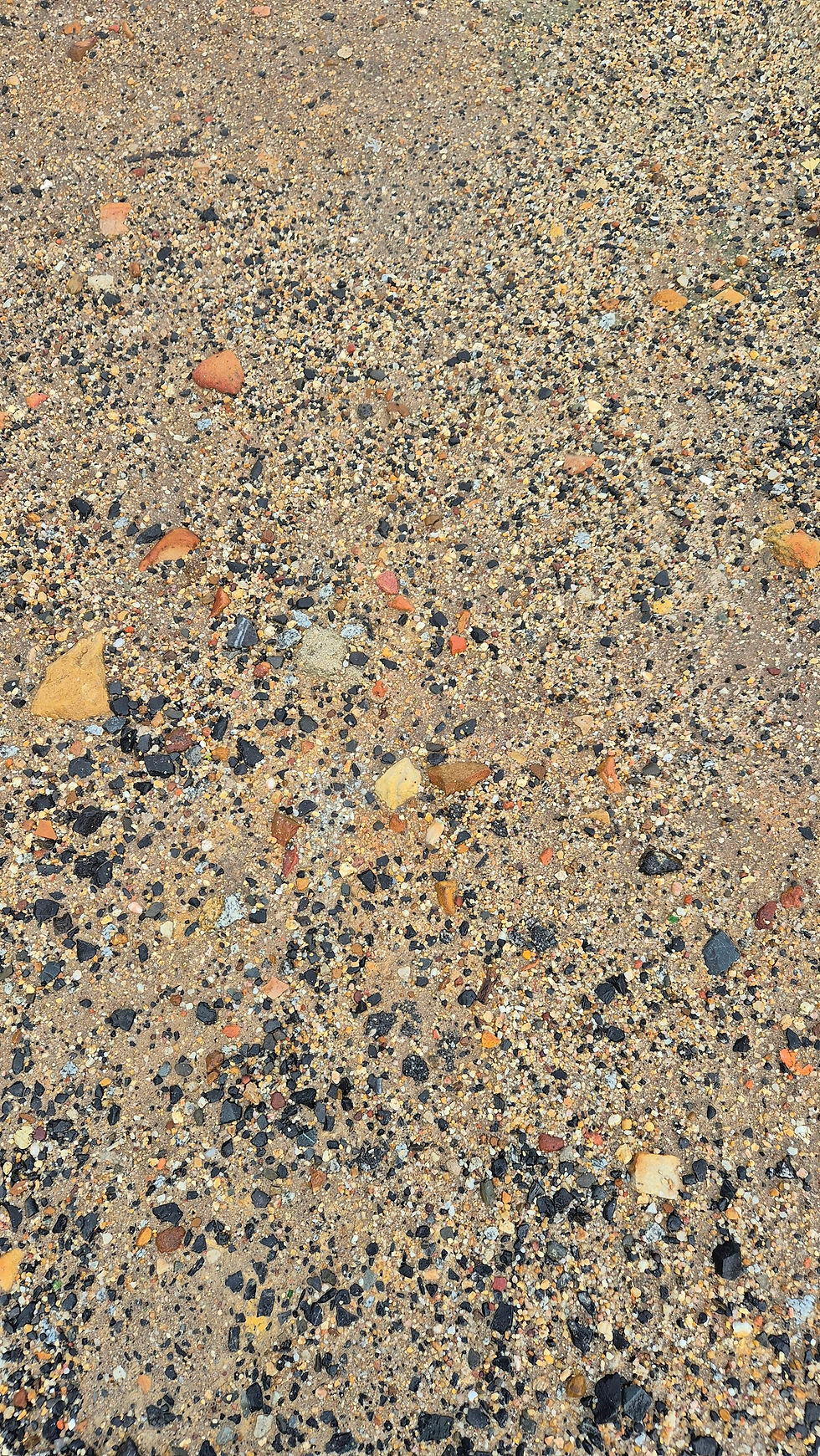
Colour: popular choices include white flint, golden gravel, red granite and black basalt. Blends work well: one popular European exposed aggregate paver uses two parts red granite to one part black basalt.
Size: fine blends (pavingexpert gives 3-6mm as a popular size in exposed aggregate paving) give a smoother texture. Larger stones, up to 20mm or more, look more rustic and grip more, but feel rougher underfoot.
Shape: rounded gravels feel smoother; crushed angular stones look crisper and grip harder.
Mixes can also be coloured to change the tone of the cement between the stones.
Pros and cons of exposed aggregate
Pros:
Grip. The stones give a textured, non-slip surface, which suits slopes, steps, ramps and pool surrounds.
No loose stones. Unlike gravel, nothing scatters onto the lawn or into the house.
Strength. It's a concrete slab, so it carries cars well on a proper base.
Natural look. It reads as stone rather than imitating it.
Low maintenance. Sweep, wash down and reseal every few years.
Cons:
Not permeable. It's still concrete. On a front garden in England over 5 square metres, the water has to drain to a lawn, border or soakaway on your land, or you'll need planning permission. The government's front garden guidance treats concrete as impermeable.
Repairs show. As with any concrete, a patched area won't match exactly.
Rougher underfoot with larger stones, which some people don't want on a patio where children play barefoot.
Skilled timing. Wash off too early and stones loosen; too late and the paste won't come away evenly.
Exposed aggregate vs imprinted concrete vs resin
All three are decorative finishes on a solid base, but they suit different houses.
Imprinted concrete is stamped to look like slate, cobbles or brick, in a wide range of colours. It's the choice when you want a pattern. See our pattern imprinted concrete page for the designs.
Exposed aggregate has no pattern, just stone. It suits modern houses, rural properties and slopes where grip matters most.
Resin bound is a smooth layer of stone held in resin, which is permeable on the right base. We've compared the two directly in resin bound vs exposed aggregate.
Where exposed aggregate suits best
Sloping driveways and approaches where tyres and feet need grip.
Paths, ramps and steps, including step-free access.
Pool and hot tub surrounds.
Larger rural or contemporary properties where a pattern would look fussy.
Mixed schemes, such as an exposed aggregate path beside an imprinted patio.
Exposed aggregate questions, answered
Is aggregate concrete the same thing?
All concrete contains aggregate. "Aggregate concrete" usually means a decorative finish where you can see the stones, which in practice is exposed aggregate.
Does exposed aggregate need sealing?
It's usually sealed. A sealer helps hold surface stones, brings up their colour and makes oil and dirt easier to clean off. Resealing every few years keeps it that way.
How much does it cost?
More than plain concrete, as you'd expect from the decorative stone and the extra finishing work. Our exposed aggregate driveway cost guide sets out typical UK ranges.
Pete can talk through the stone choices on the free site visit so you can judge them against your house, anywhere from Tettenhall across to Telford, Stafford and Dudley.


Comments