


How Long Does Concrete Take to Dry on a New Driveway?

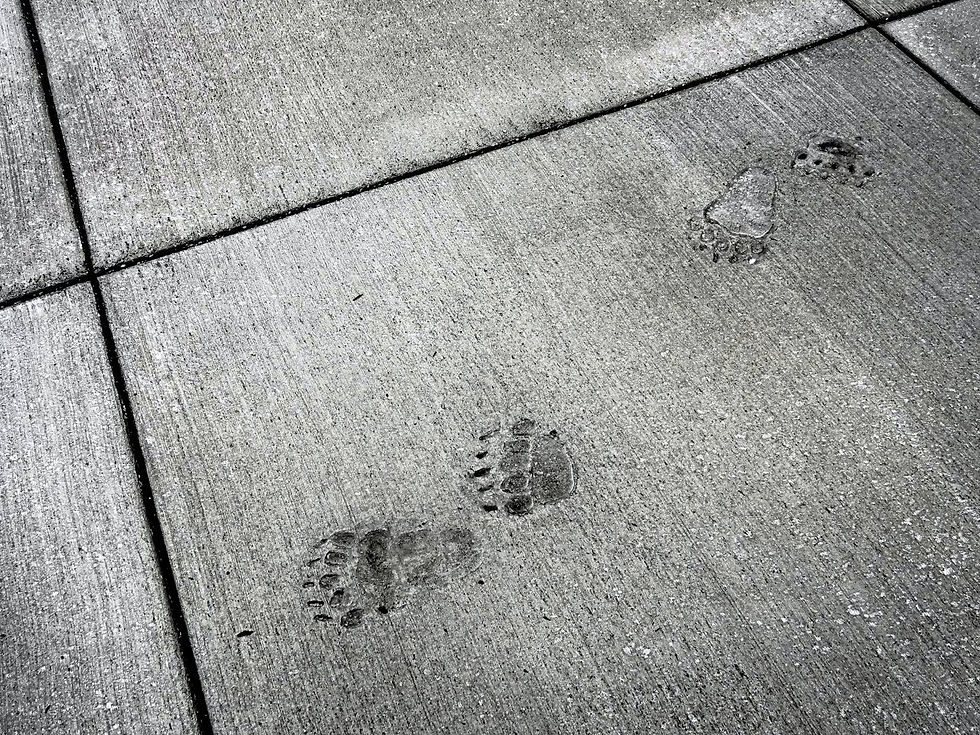
A new concrete driveway is usually dry enough to walk on after 24 to 48 hours and ready for a family car after about 7 days, when it has reached roughly 70% of its design strength. It keeps gaining strength for around 28 days, which is the point to wait for before vans, skips or anything heavy goes on it. Cold weather stretches every one of those times.
Set, dry and cure are three different things
Most of the confusion comes from people using these words as if they mean the same thing. They don't.
Setting is the concrete stiffening from a wet mix into a solid. It happens over the first few hours, which is why the finishing work on a slab has to be done in one go.
Drying is surface water evaporating. The top can look pale and dry within a day while the slab underneath is still soft.
Curing is the chemical reaction between cement and water that gives concrete its strength. It needs moisture, not dryness, and it carries on for weeks.
That last point surprises people. Concrete doesn't get strong by drying out. A slab that dries too fast in sun and wind can end up weaker at the surface and more likely to craze, which is why curing is about keeping the water in for the first week.
How long before you can walk on new concrete?
Light foot traffic is generally fine after 24 to 48 hours, and normal foot traffic after 48 to 72 hours. In the first two days keep pets, bikes, wheelie bins and anything with a narrow wheel or sharp edge off it, because the surface still marks.
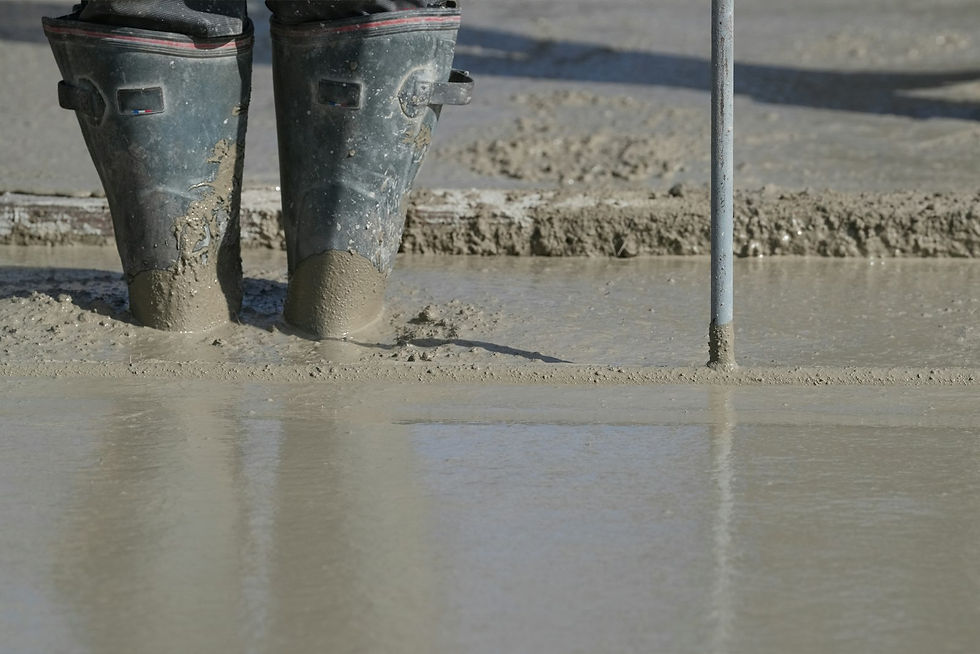
If the slab has to be crossed to reach the front door, lay boards across it on day one rather than tiptoe over it. A footprint pressed into the surface at hour six is there for the life of the drive.
How long before you can drive on concrete?
For a car or small van, wait at least 7 days. By then most mixes are at about 70% of their design strength, which handles normal domestic traffic. Waiting closer to 10 days gives the surface extra protection against tyre scuffs, especially if you turn the wheel while stationary.
For anything heavy (a delivery lorry, a skip wagon, a motorhome, a mini digger) wait the full 28 days. That's the age at which concrete is tested for its design strength, and it's the figure engineers work to.
On a pattern imprinted concrete driveway the timings are similar: pavingexpert's guidance is that an imprinted drive is usually safe to traffic 4 to 7 days after laying, with the formwork coming off after 3 to 7 days. Plan for a week off the drive and treat the second week gently.
A typical timeline for a new concrete drive
Assuming a dry spell of mild weather (10 to 20°C), a new slab goes roughly like this:
Day 0: pour, level, finish. For imprinted concrete, the colour hardener, release agent and stamping all happen while the concrete is still workable.
Day 1-2: foot traffic only, carefully. Surface looks dry, but isn't strong.
Day 1-4: an imprinted slab is washed down to remove the release agent (usually 24 to 96 hours after the pour), then sealed once it's dry.
Day 3-7: forms removed. On an imprinted drive the control joints are usually sawn a week or more after sealing.
Day 7-10: cars back on the drive.
Day 28: design strength reached. Heavy vehicles allowed.
Exposed aggregate concrete follows its own early schedule: the surface retarder is sprayed on within a few hours of the pour and washed off the next morning, 12 to 18 hours later, to reveal the stones. Pavingexpert's guidance is to keep heavy traffic off for the first 5 days or so.
What slows concrete down?
Temperature does more than anything else. Curing is a chemical reaction, and like most reactions it slows right down in the cold.
Cold: below about 5°C strength gain drops off sharply. Cemex's cold weather guidance says concrete should be at least 5°C when delivered, and that fresh concrete which cools below 0°C can freeze and expand badly enough to be useless and need removing. Once it reaches roughly 2 N/mm², it's likely to resist that damage.
Heat and wind: warm, dry, breezy days pull water out of the surface too quickly. The slab sets fast but the top can end up weak or crazed.
Rain: heavy rain on a freshly finished surface washes out the cement paste and ruins texture or imprint. Once the surface has set, rain does no harm and actually helps curing.
Mix and thickness: richer mixes gain strength faster. Thicker slabs hold heat and moisture longer.
So "7 days" in July and "7 days" in November are not the same. In a cold snap we'd advise adding a few days before driving on it.
How to protect new concrete while it cures
Most of this is the installer's job on site, but it helps to know what's going on.
Keep it damp, not wet. Covering the slab with polythene or lightly misting it in the first week keeps the water in so curing carries on.
Cover it against frost. If frost is forecast in the first couple of nights, the slab gets covered with frost blankets or insulated sheeting. Pouring is the wrong call when a hard frost is on the way.
Keep it shaded in a heatwave. Direct sun and drying wind are a bigger threat than drizzle.
Stay off the edges. Edges and corners are the weakest parts of a young slab. Don't park with a wheel on the edge or run a trolley jack on it.
Hold off on chemicals. No de-icing salt in the first winter if you can avoid it, and no strong cleaners on fresh sealer.
Concrete drying questions, answered
Can it rain on concrete the day after it's laid?
Yes. Once the surface has set (usually a matter of hours), rain is not a problem and helps keep the slab damp for curing. The risk is heavy rain in the first few hours, before the finish has firmed up.
Why does my new concrete look patchy?
Patchy colour in the first weeks is normal. Different areas dry at different rates depending on shade, thickness and wind. It evens out as the slab dries through. A sealed imprinted surface will look more uniform once the sealer has fully dried.
Can I put a skip or a car jack on it after a week?
Not a skip. A loaded skip is a heavy point load: wait 28 days and use boards to spread it. A car jack on the surface is fine after the first week or two, ideally on a board.
Does exposed aggregate or imprinted concrete take longer than plain?
The concrete underneath cures at the same rate. What differs is the finishing work on the first few days (washing off, sealing), so the drive is out of action for about the same time.
If you want the wider picture on durability and upkeep, our pattern imprinted concrete pros and cons covers what a properly cured slab gives you over 20 years, and the same curing rules apply to a concrete patio. Pete and the team plan pours in Wolverhampton around the forecast so the slab gets the conditions it needs in its first week, and we'll tell you when you can drive on it before we start.


Comments